From the Bookies to the Break Room: How Gambling Language Took Over British Small Talk
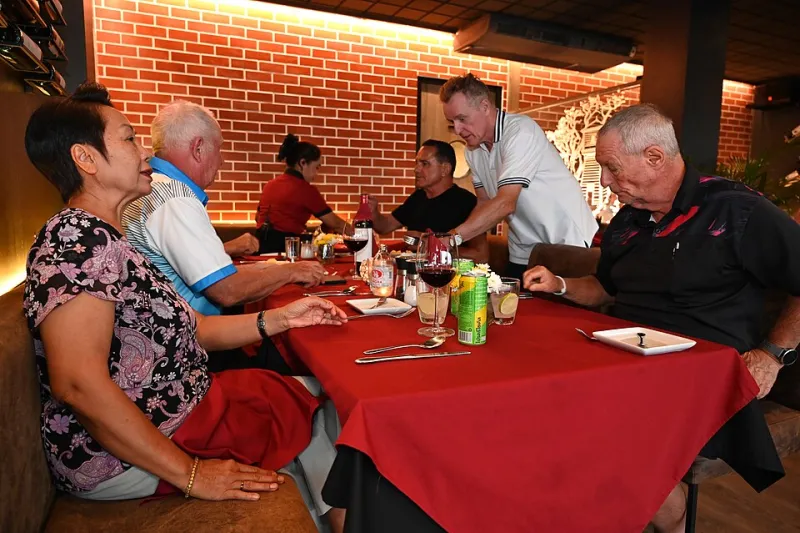
Photo: PattayaPatrol, CC BY-SA 4.0, via Wikimedia Commons
Picture the scene: Monday morning, office kitchen, kettle on. Someone says they're "cashing out" of a holiday booking. Another colleague reckons it's "odds on" that the client meeting overruns. By lunchtime, someone's described the new starter as "a bit of a dark horse" and announced that the Christmas party budget is "a jackpot win".
Nobody in that kitchen has placed a bet. Yet everyone is speaking fluent bookie.
The Vocabulary That Walked Out of the Betting Shop
Gambling language is so woven into British speech that most of us don't notice we're using it. "Cash out" — a term that began life as a feature on betting slips and now lives on in cash-out betting apps — has become standard workplace shorthand for cutting your losses on anything from a gym membership to a bad haircut.
"Odds on" has drifted so far from the racetrack that it now just means "probably". "The house always wins" gets quoted in budget meetings about energy suppliers. "A safe bet" describes a restaurant choice. "Up the creek"? "Chancer"? "Skint"? The betting shop's fingerprints are everywhere.
Even reality TV has done its bit. Love Island contestants talk about "playing the game" and "hedging their bets" between bombshells. Reality dating shows are, structurally speaking, a casino floor with better lighting — and the contestants' vocabulary proves it.
Why British English Is Particularly Susceptible
Other countries gamble, obviously. But the UK has a unique relationship with betting: it's legal, licensed, advertised on the telly during the football, and embedded in institutions from the Grand National to the office sweepstake. The pools, the pub quiz, the EuroMillions syndicate at work — betting-adjacent activity is a default social setting here.
So the language followed. When something is part of the furniture, its vocabulary becomes yours. We don't think of "each way" as racing terminology; we think of it as how you describe a mate who's "not bad, each way" — decent, with an outside chance.
There's also something distinctly British about the tone of these phrases. Gambling language is dry, fatalistic, and quietly self-deprecating. "The house always wins" isn't an American motivational slogan — it's a shrug. "Taking a punt" sounds adventurous but really means giving something a go with modest expectations. It's the linguistic equivalent of a sigh and a cuppa.
The Pub Quiz Test
Want proof of how deep this goes? Try a pub quiz. Picture rounds on "famous horses", questions on odds, a music round that somehow always includes a song with "jackpot" in it. The casual British gambler's lexicon — accumulators, each way, the each-way shill, bankroll, stake, evens — is general knowledge. Nobody studies it. It arrives by osmosis, via Match of the Day, family Christmases, and the bloke at the wedding who "had a few quid on the outsider".
What the Normalisation Actually Means
Here's the interesting bit, and it's worth saying plainly: the fact that gambling vocabulary is everywhere isn't automatically a problem, but it's not nothing either. When betting language is this ordinary, the underlying activity can feel ordinary too — just another thing adults do, like choosing a pension or moaning about trains.
That's mostly harmless when it's about metaphor. Nobody is gambling when they "cash out" of a group chat. But the same normalisation that makes phrases feel natural also makes actual betting feel low-stakes, when for some people it very much isn't. The words are friendly; the arithmetic behind them sometimes isn't.
At RR888 UK we spend a lot of time on the practical side — bankrolls, bonus terms, making a tenner last an evening — and one thing comes up again and again: the people who enjoy gambling longest are the ones who see it clearly, not through rose-tinted language. Knowing that "the house always wins" isn't just a quip but a structural fact is genuinely useful knowledge.
Enjoying the Language Without the Losses
The good news is you can keep the vocabulary and skip the risk entirely. Use "jackpot" for a parking space. Call a dodgy plan "a bit of a punt". Describe your mate's new relationship as "odds on to fail" behind his back, as is tradition. The metaphors work fine without a bet slip in your pocket.
And if you do fancy a flutter now and then, treat the language as a reminder rather than an invitation: a stake is money you're prepared to lose, a bankroll has limits, and cashing out early is a skill, not a defeat. British speech borrowed the words. The wisdom, as ever, is optional — but recommended.
Either way, next time someone in the office kitchen says it's "odds on" the printer jams again, take a moment to appreciate it: you're listening to a betting shop that learned to make small talk.